 |
 |
 |
|||||
|
|||||||
 |
|||||||
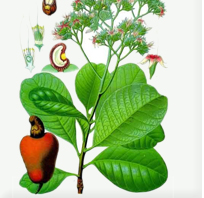 |
|||||||







| CASHEW |
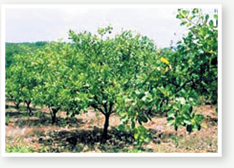
The Cashew has a long history as a useful plant,
but only in the present century it become an important
tropical tree crop. The earliest reports of cashew are
from Brazil, coming from French, Portuguese and
Dutch observers. Thevet (1558) a French naturalist,
visited Brazil during the brief period of French
settlement and first described the plant at a location somewhere on the north coast. He
recounted that cashew apples and their juice were consumed and that the nuts were roasted in
fires and the kernels eaten. Thevet provided the first drawing of the cashew showing the local
people harvesting fruits and squeezing juice from the cashew apple into a large jar.
Gandao(1576) was the first Portuguese writer to describe the cashew, relating that the
cashew apple was a very 0refreshing fruit during the hot season and that the kernels were
better tasting than almonds.
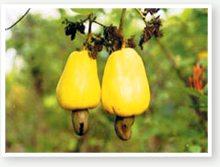
A general account of the land and people of Brazil
(1984) furnishes some botanical informa- tion on the
flowering and fruiting habit of the cashew and discusses
ways in which the fruit and nut were used as food.
Soares de Soucer (1587) in his classic work on
Sixteenth century Brazil, provides valuable information
on the botany of the cashew, a good description of the use of the cashew nut, and a report
that cashew apples and juice were thought to have medicinal value.
| Powered by eTrade Myanmar Co.,Ltd. |